


-v1698821311816.webp?1800x1800&options=w_65)




-v1698821311816.webp?1800x1800&options=w_60)


Why Dry-Aged Beef Tastes Different

If you have ever eaten a properly dry-aged steak, you probably noticed the difference before you could explain it. The flavour was deeper, more concentrated, and more complex than any steak you had eaten before. There may have been a nuttiness to it, or something almost buttery. The texture was yielding in a way that fresh-cut beef rarely achieves.
That experience is not a coincidence or a product of good seasoning. It is the result of a carefully controlled biological process that has been understood by butchers for centuries, even if the science behind it was only formally studied in the last few decades.
This article explains what dry aging actually does to beef, why the flavour is so distinctive, and what to look for when buying dry-aged beef in New Zealand.
What Is Dry Aging?
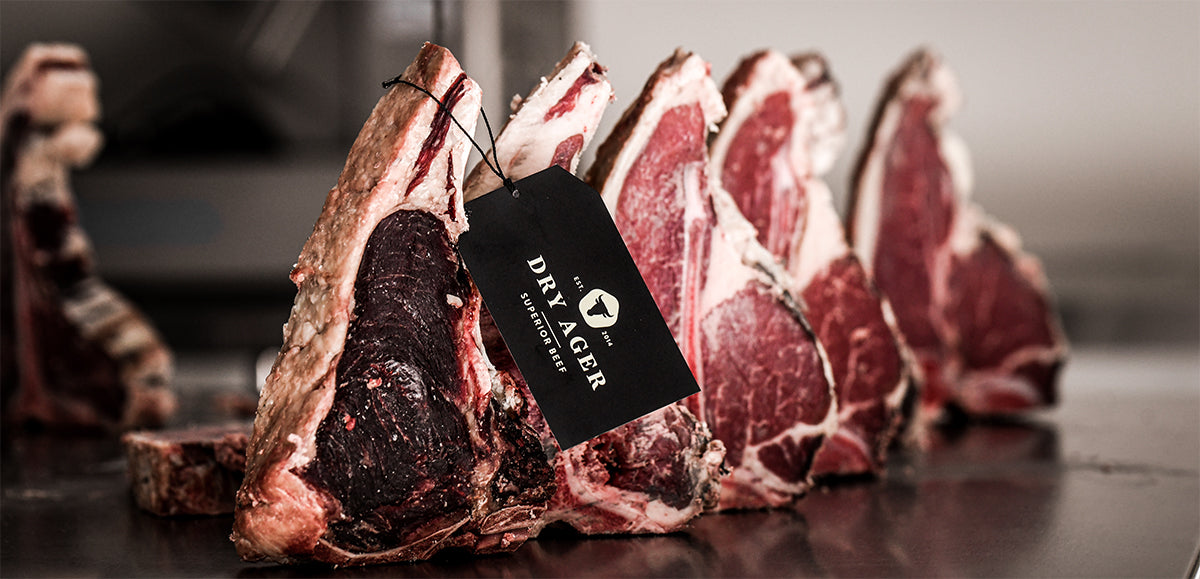
Dry aging is the process of storing large primal cuts of beef in a temperature and humidity-controlled environment for an extended period, typically anywhere from 21 days to 100 days or more. During that time, two distinct processes unfold inside the meat that transform it completely.
This is fundamentally different from the way most supermarket beef is handled. The majority of commercially sold beef is wet-aged, meaning it is vacuum-sealed in plastic packaging and held in its own juices for a week or two before it reaches you. Wet aging does tenderise the meat, but it does not develop flavour in the same way.
Dry aging is open to the air. The moisture leaves. The flavour concentrates. The process is slower, more demanding, and more costly. But the result is genuinely different.
The Two Processes That Drive the Flavour
Moisture Loss and Flavour Concentration
As a primal cut hangs in the dry-aging room, it gradually loses water through evaporation. A cut aged for 30 days may lose around 15 per cent of its original weight in moisture. At 60 days, that loss is significantly greater.
This matters because beef flavour is largely held in its water-soluble compounds. As the moisture leaves, the flavour that remains becomes more concentrated. Think of it like reducing a stock on the stove: as the liquid reduces, the intensity of the flavour increases. A dry-aged steak at 45 days has a depth of beefy flavour that is almost impossible to achieve with a fresh-cut piece of the same weight.
This moisture loss is also one of the reasons dry-aged beef is priced higher than fresh beef. You are paying for a product that weighs less than it started, with the additional cost of weeks of storage, temperature management, and skilled butchery to trim away the exterior crust that forms during the process.
Enzymatic Breakdown and Tenderness
The second process is enzymatic. Inside the muscle fibres of beef, naturally occurring enzymes called calpains and cathepsins are continuously breaking down protein structures. In a fresh-cut steak, this process has barely begun. In a dry-aged steak, it has had weeks to work.
The result is that the connective tissue and muscle fibres gradually soften. The texture becomes notably more yielding. A properly dry-aged steak at medium-rare does not require significant effort to eat. The tenderness is built into it.
This is also why the cut of beef matters enormously for dry aging. Only larger, well-marbled primals have sufficient fat and mass to hold up through the aging process. Lean, thin cuts would simply dry out before the enzymatic work could take effect. The best cuts for dry aging are bone-in ribs and sirloin, both of which have the right structure and fat content to age beautifully.
The Flavour Profile: What to Expect at Different Ages
The flavour of dry-aged beef is not a single note. It changes and develops as the aging period extends, and different people have different preferences depending on how intense they want the experience to be.
30 to 44 days: The sweet spot for most first-time dry-aged beef eaters. The beef flavour is noticeably more intense than fresh-cut, with a clean richness that is unmistakably superior without being challenging. This is where maximum tenderisation occurs, and the flavour gains depth without the more complex notes that develop later.
45 to 59 days: A more assertive flavour profile. Nutty, slightly earthy notes begin to emerge alongside the concentrated beef flavour. The texture continues to soften. An excellent choice for those who have tried the shorter aging window and want more.
60 to 79 days: Deeper still, with the nuttiness becoming more pronounced. Some describe flavours reminiscent of aged cheese or warm buttered popcorn at this point. This is serious dry-aged beef for serious eaters.
80 to 100 days: The most intense option in Matangi's range. Deeply complex, with a powerful umami character and almost funky aromatic notes that are polarising in the best possible way. These cuts are not for everyday eating but represent the absolute peak of what the dry-aging process can produce. Matangi is one of very few producers in New Zealand offering beef aged to this point.
Why the Starting Quality of the Beef Matters
Dry aging amplifies what is already in the beef. It concentrates flavour, accelerates tenderness, and reveals the character of the underlying animal. This means that a mediocre piece of beef will still be mediocre after aging. The starting quality of the animal is everything.
This is why Matangi's dry-aged beef is genuinely different from most of what you will encounter at a supermarket or casual restaurant. The cattle are 100% grass-fed, raised on Matangi's Hawke's Bay farms for a minimum of 24 months before harvest. They develop natural marbling on pasture without grain-finishing, and that marbling is essential to the aging process. Without adequate intramuscular fat, the beef cannot age properly.
The aging itself is done in German-made DRY AGER cabinets, which maintain precise temperature, humidity, and airflow conditions throughout the process. This level of control is not achievable in a domestic fridge, which is why home dry-aging attempts rarely produce the same results.
Dry Aging vs Wet Aging: The Key Differences
This is a question that comes up often, and it is worth answering clearly.
Wet aging, the process used for the majority of commercially sold beef in New Zealand and globally, places the meat in vacuum-sealed packaging where it sits in its own juices for a period of days or weeks. It does tenderise the meat by allowing enzymatic activity to continue. But because the moisture cannot escape, the flavour concentration that defines dry-aged beef does not occur. The result is milder, sometimes with a slightly metallic or lactic note from the accumulated juices.
Dry aging produces a fundamentally different product. The moisture loss concentrates the flavour. The controlled environment allows the enzymatic process to go further. And the development of beneficial surface microflora during extended aging adds complexity that wet aging cannot replicate.
The two processes are not competing with each other. Wet aging is practical and produces a good product. Dry aging is slow, costly, and produces something exceptional.
How to Cook Dry-Aged Beef
Because dry-aged beef has lower moisture content than fresh-cut beef, it behaves slightly differently in the pan or on the grill.
A few points worth knowing:
-
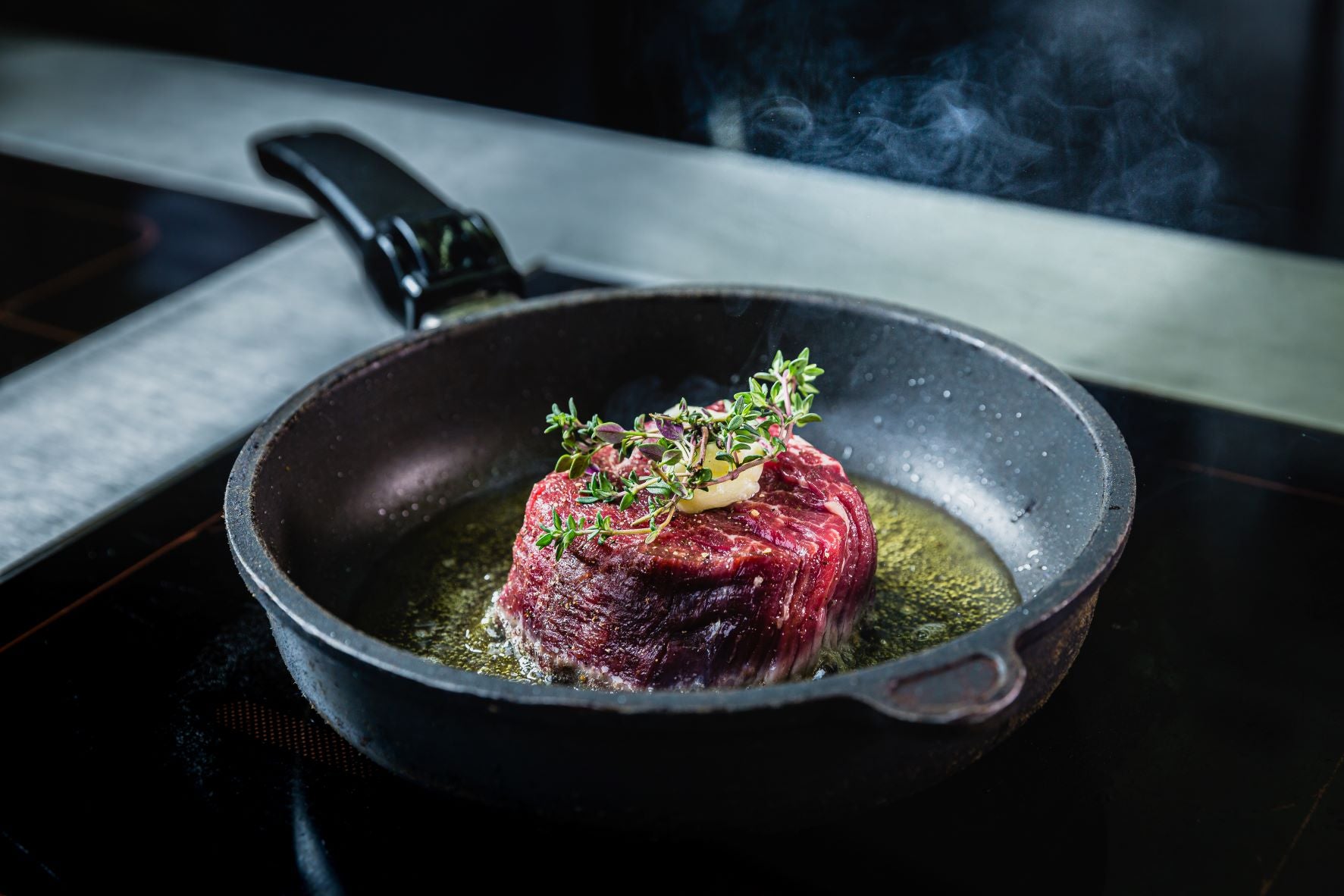
Dry-aged beef develops a crust more quickly. The reduced surface moisture means the Maillard reaction happens faster, so watch your heat and timing carefully.
-
Use a meat thermometer. The reduced moisture content makes it easier to overcook, and the difference between medium-rare and medium is particularly important here. Investing in a MEATER Thermometer takes the uncertainty out of the process entirely.
-
Season simply. Salt and perhaps cracked pepper is all you need. The flavour is already there. Adding a complex rub or heavy sauce over a properly aged steak will work against you.
-
Rest generously. As with any premium steak, resting allows the internal juices to redistribute. Five to ten minutes under foil before serving makes a meaningful difference to the eating experience. See our full Steak Doneness Guide for temperature targets at each level.
-
Aim for medium-rare to medium. This is where the flavour and texture of dry-aged beef is at its best. Higher temperatures push the moisture out of the meat and work against everything the aging process has built.
Choosing a Dry-Aged Cut from Matangi
Matangi's Dry-Aged Beef collection covers multiple aging windows and cut styles, so there is an entry point for everyone from the first-time buyer to the experienced connoisseur.
For those new to dry-aged beef, a 30 to 44 day Scotch Fillet is the ideal starting point. It delivers all of the core benefits of the aging process in a well-known, accessible format.
For those after the BBQ centrepiece experience, the Tomahawk or Cowboy Steak in the 45 to 59 day range offer spectacular presentation alongside serious flavour depth.
For the most committed beef eaters, the 80 to 100 day Bone In Ribeye is one of the most intensely flavoured pieces of beef available in New Zealand.
All cuts are vacuum-sealed and dispatched from the Hastings butchery in chilled packaging for overnight delivery anywhere in New Zealand.
The Investment Is in the Experience
Dry-aged beef costs more than fresh-cut beef. That is simply a reflection of the time, space, skill, and starting material required to produce it well. A 30 per cent moisture loss is a 30 per cent reduction in sellable weight from the same primal. The cost of running a precision aging facility for weeks or months is real. And trimming the exterior crust removes further product before any of it reaches you.
What you are paying for is concentration. A dry-aged steak contains more flavour per gram than anything the same animal could have produced without that investment of time. It is not a luxury for its own sake. It is the most honest expression of what great beef can be.
If you have not tried it yet, it is worth doing once just to understand what beef is capable of. For most people who do, it changes the reference point permanently.
Browse the full Dry-Aged Beef collection or explore the complete range of Matangi beef to find the right cut for your next meal.